Chariot
0
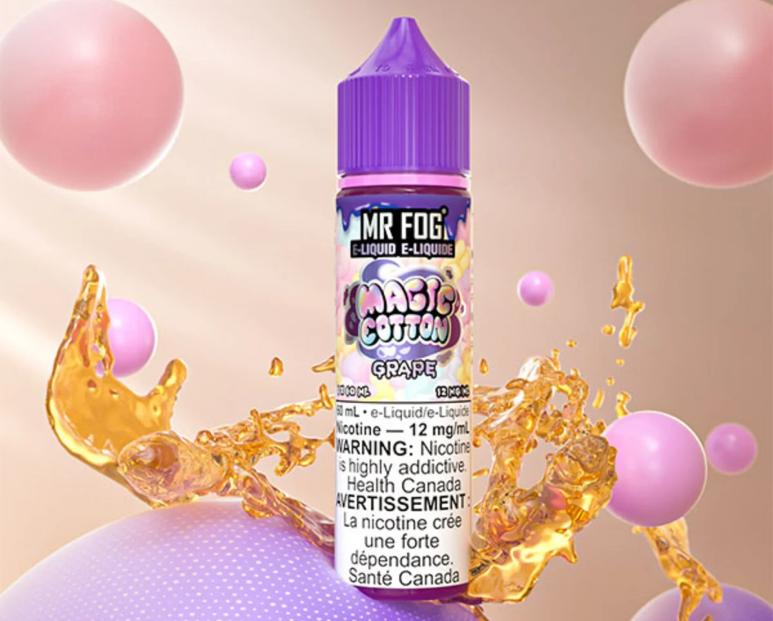
Your e-liquid has a PG/VG ratio—but what are PG and VG, and what do the different ratios mean? They’re carrier agents that affect cloud production, flavour, and vapour production. Let’s learn more:
Key Takeaways
-
E-liquids are made of four ingredients: Nicotine, flavourings, propylene glycol (PG), and vegetable glycerin (VG).
-
PG/VG are carriers for flavours and nicotine.
-
Propylene glycol produces less vapour and offers a harsher throat hit.
-
Vegetable glycerin produces more vapour, but is sweeter and can clog coils.
-
Manufacturers use a mix of PG and VG to get the best qualities from both.
-
Different devices and different vaping styles benefit from different ratios.
-
Experimenting with different ratios is the best way to find the right ratio for you.
PG/VG In E-Liquids
To understand PG/VG ratios, you have to understand the composition of e-liquids. E-liquids are typically composed of four primary ingredients:
-
Nicotine (though some e-liquids have no nicotine)
-
Flavourings
-
Propylene Glycol (PG)
-
Vegetable Glycerin (VG)
The purpose of nicotine and flavourings is pretty obvious—PG and VG are where things get interesting. They both act as carrier agents; without them, the nicotine and flavouring would vaporize poorly and could damage the coil in your vape.
Most vape juice manufacturers use a mix of both PG and VG in their products. Let’s dive deeper into what each chemical does, why they’re used in a mix, and how choosing the right PG/VG ratio enhances your vaping experience:
PG And VG Explained
PG (Propylene Glycol)
Propylene glycol, as the name implies, is a petroleum derivative—and like many petroleum derivatives, it’s used in all kinds of different products. You’ll find PG used as an anticaking agent, stabilizer and a solvent in food, as a moisturizer, and as a carrier agent in pharmaceutical vaporizers.
PG is an odourless, clear, and colourless liquid with a slightly sweet taste. It’s also quite thin; this means it’s readily absorbable by wicks, which helps keep vapes from getting clogged and wicks from getting burned. When vaped, PG produces little vapour and produces a noticeably harsher throat hit.
VG (Vegetable Glycerin)
Vegetable glycerin is a sugar alcohol derived from vegetable oils. Manufacturers use it to add sweetness to low-fat foods and toothpaste, as an emulsifier to improve the texture of some sauces, and as a thickening agent for some medications.
VG is thick and syrupy; as a sugar alcohol, it has a noticeably sweet taste. VG is responsible for creating the thick clouds that people associate with vaping; because it’s a thicker liquid, however, it can gunk up coils faster than PG.
PG Vs. VG In Vaping
Most vape manufacturers use a combination of PG and VG in their e-liquids. Both carriers have desirable qualities, but having too much of one or another can create problems. Here’s a quick look at the pros and cons of each:
|
Carrier |
Pros |
Cons |
|
PG |
Great for wicking. |
Too much can lead to a throat hit that’s too harsh. |
|
VG |
Great for making clouds. |
Can clog wicks. |
Vapers tend to prefer a mix of a good throat hit, good vapour production, and good flavour; that’s why manufacturers mix PG and VG. Manufacturers will often list PG/VG ratios on their products so that vapers know what kind of experience they’re going to get.
What The PG/VG Ratio Means
The PG/VG ratio is easy to understand: It’s the percentage of propylene glycol to vegetable glycerin in your vape juice. When an e-liquid has a PG/VG ratio of 70/30, it means that 70% of the carrier agent in your juice is PG, while 30% of the carrier agent is VG.
Want to understand how the PG/VG ratio of your e-liquid will affect your vaping experience? Take a look at this chart:
|
PG% |
VG% |
Vapour Production |
Flavour |
Throat Hit |
|
100% |
0% |
Very low |
Undiluted |
Extremely strong |
|
90% |
10% |
Very low |
Extremely strong |
Extremely strong |
|
80% |
20% |
Low |
Very strong |
Very strong |
|
70% |
30% |
Low |
Very strong |
Strong |
|
60% |
40% |
Balanced |
Strong |
Strong |
|
50% |
50% |
Balanced |
Strong |
Moderate |
|
40% |
60% |
Larger clouds |
Slightly sweeter |
Moderate |
|
30% |
70% |
Large clouds |
Slightly sweeter |
Lower |
|
20% |
80% |
Very large clouds |
Noticeably sweeter |
Lower |
|
10% |
90% |
Very large clouds |
Noticeably sweeter |
Minimal |
|
0% |
100% |
Biggest clouds |
Sweetest |
None |
We put the most common PG/VG ratios in bold; these are the ratios you’ll see in the vast majority of the products on the market, with 50/50 being the most popular. 50/50 offers an excellent balance of flavour, cloud production, and throat hit.
Which PG/VG Ratio Do You Need?
The PG/VG ratio you’ll want to choose depends on a number of factors, including:
-
Whether or not you want to blow thicker clouds
-
The type of device that you are using
-
How much of a throat hit you want
-
Whether or not you’re using sub-ohm coils
-
How sharp or sweet you want your flavours to be
Let’s start by taking a look at the most common PG/VG ratios for different devices and coils:
|
Device |
Most Common Coil |
Best PG/VG Ratio |
Notes |
|
Disposables |
High-ohm (1.0Ω+) |
50/50; you cannot choose the ratio in these devices. |
The PG/VG ratio will usually be designed for the device; 50/50 helps vapours stay subtle with less vapour production and a less pronounced throat hit. |
|
Pod systems |
High-ohm (1.0Ω+) |
50/50 |
Most pods are prefilled. Be careful if you use a refillable pod; high VG e-liquids can clog the system. |
|
Sub-ohm tanks |
Sub-ohm (<1.0Ω) |
70/30 VG/PG |
These tanks are made for cloud-chasing; they’re also great for sweeter flavours. |
|
Box mods |
Customizable, but often sub-ohm <1.0Ω |
Any |
Box mods can be designed for mouth-to-lung (MTL) or direct-to-lung (DTL) hits; depending on how you customize them, any PG/VG ratio liquid should work. |
Finding Your Ideal PG/VG Ratio
Finding the right PG/VG ratio is all about trial and error. Want a more satisfying throat hit? Think about getting a higher PG e-liquid; the harsher throat hits they offer can feel more similar to traditional cigarettes, which can be a great thing for people who want to vape instead of smoking tobacco.
Want to blow thicker clouds? Consider getting a high VG juice, especially if you’ve got a sub-ohm vape that can handle denser vape juices.
There is no one perfect ratio, but if you’re looking to experiment with different e-liquids, Cold Turkey Vape Shop can help. Visit our online vape shop and take a look at the different e-liquids we offer; you’ll be bound to find one that’s right for you!